








You wrote a brilliant research paper. At least, you think so. But the journal editor did not agree. They sent you a rejection email within 48 hours. It hurts. It feels like a punch to the gut.
I have been there. Most academics have. The difference between rejection and acceptance often comes down to one thing: manuscript quality. Not just the science, but how you present it.
Let us fix that. Here is the logical, no nonsense guide to getting your paper accepted.
Why Most Manuscripts Fail Before the Peer Review
Here is a hard fact. Editors do not have time. A senior editor at Elsevier once told me that they spend an average of 2 minutes on a first pass. If your abstract is messy, your figures look like potato photos, or your grammar is painful, you lose.
According to a study published in Learned Publishing, nearly 40% of manuscripts get desk rejected. That means they never even go to reviewers.
The reason? Poor structure and lack of clarity. Not bad data.
You need to stop treating your manuscript like a diary entry. Treat it like a business proposal. The journal needs to make money. They need citations. Your paper must look professional from page one.
The Logical Path to High Quality Manuscripts
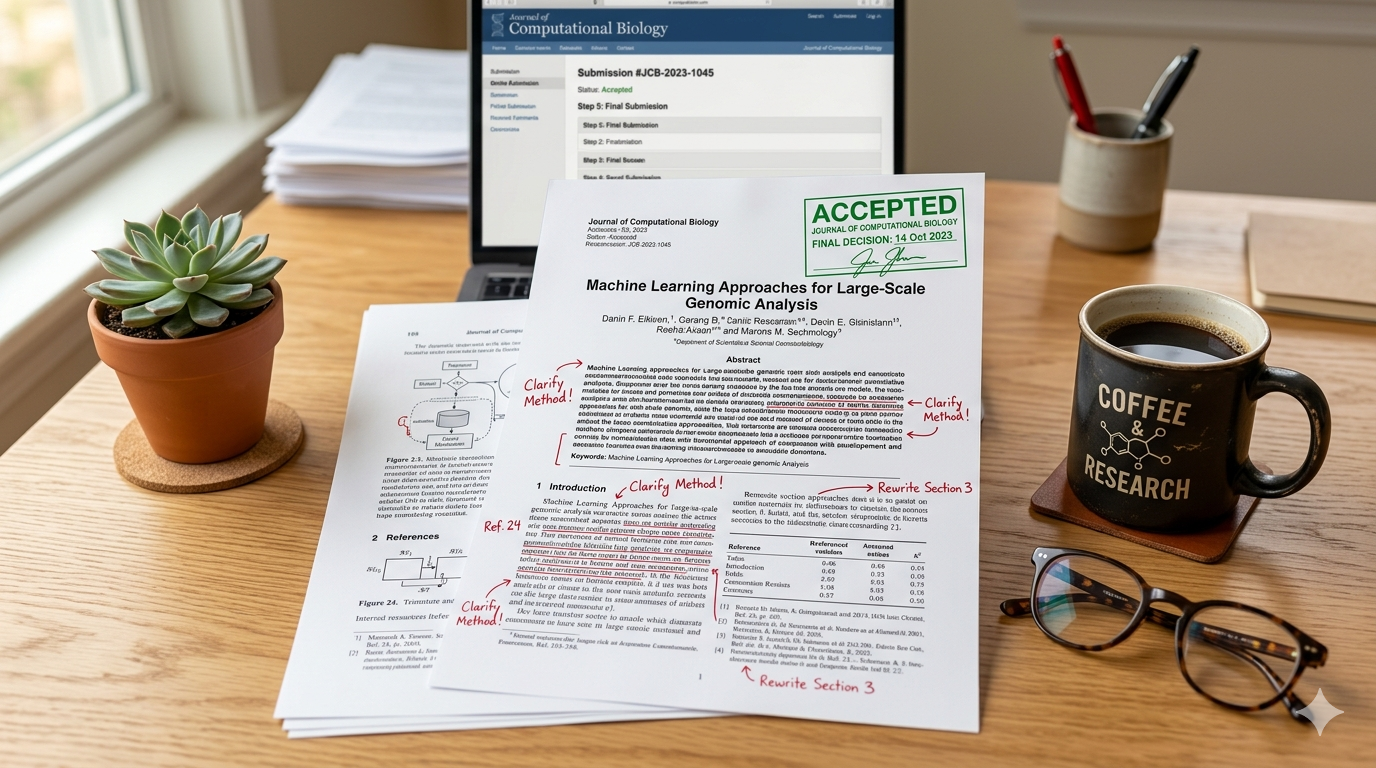
You cannot improve what you do not measure. Start with a brutal self audit. Print your draft. Take a red pen. Cross out every vague sentence.
Ask yourself: Does this sentence need to be here?
Most researchers add fluff. They use complex words to sound smart. Stop that. Use simple, declarative sentences. If an 8th grader cannot read your first paragraph, you lose the editor.
Structure Your Story Like a Pro
A high quality manuscript follows a predictable path. Do not invent a new structure.
-
The Funnel Shape: Start broad, get narrow, go broad again.
-
The “So What?” Test: Every paragraph must answer why the reader should care.
-
The Short Paragraph Rule: No block of text should exceed 6 lines.
Logic wins here. If your methodology section does not allow another scientist to replicate your work, you fail. That is a hard rule of the scientific method.
How to Avoid Journal Rejection in 3 Practical Steps
Let me give you a practical roadmap. Follow these steps exactly, and your rejection rate will drop significantly.
Step 1: Match Your Paper to the Journal’s Scope.
This sounds obvious. But 30% of rejections happen because the paper belongs to a different field. Read the journal’s “Aims and Scope” page. Not the title. The actual page. Check their last three issues. Are they publishing your type of study?
Step 2: Perfect the First Page.
The title, abstract, and keywords are your sales team. They work alone while the editor drinks their morning coffee. Your title must be specific. “A study on X” is trash. “Compound Y reduces Tumor Growth by 40% in Zebrafish Models” is gold.
Step 3: Get Technical Editing.
Language barriers kill good science. A study from Cambridge University Press noted that non native English papers are rejected 2.5x more often solely due to language issues, not science. You need a second pair of eyes.
Using Professional Help Without Shame
Here is a secret. Top scientists use help. They use research publication services to polish their work before submission. This is not cheating. This is smart business.
Think about it. You are an expert in microbiology. You are not an expert in English academic phrasing. Why would you pretend to be one?
Professional research publication services check your logic flow, citation consistency, and statistical reporting. They catch the small stuff: missing p values, inconsistent formatting, wrong citation style. These small errors signal to the editor that you are careless. If you are careless about commas, maybe you are careless about contamination controls.
That is the logic of peer review.
The Technical Side: Data and Extraction
You have raw data. You have interviews. You have proteomics results. But getting that data into a readable table is a nightmare. This is where many researchers get stuck.
You can use article extraction services to pull specific data points from your own drafts or from source literature. These tools help you reorganize your results section without losing your mind.
For example, if you have 20 patient charts and need to extract only the age, BMI, and response rate, manual extraction takes hours. Automated article extraction services do it in seconds. This leaves you more time to think about your discussion section.
A clean results section with accurate tables eliminates one major reason for revision requests. Reviewers hate hunting for numbers.
How to Handle Reviewers Like a Diplomat
Even a high quality manuscript gets revision requests. That is fine. The problem is how you respond.
Never argue emotionally. Keep a table. Column A: Reviewer comment. Column B: Your response. Column C: Changes made.
If a reviewer misunderstands something, your writing was unclear. Do not blame the reviewer. Fix the text. Use phrases like, “Thank you for pointing this out. We have revised the text on page 4 to clarify…”
This logic applies to every round of revision. Keep your cool. Get the paper accepted.
Common Myths That Ruin Your Manuscript
Let me bust some myths you hear in the lab.
-
Myth: “More data is always better.”
Fact: Extraneous data confuses the reader. If it does not support the main hypothesis, put it in supplementary materials. -
Myth: “Complex words make me look smart.”
Fact: Using “utilize” instead of “use” just makes you look like you are trying too hard. Be clear. -
Myth: “High impact journals want groundbreaking results only.”
Fact: They want reproducible results. Solid, boring, reproducible science beats flashy fake data every time.
Building Trust With Your Audience
Journals trust authors who follow guidelines. Do you have a checklist? The CONSORT checklist for clinical trials? The ARRIVE guidelines for animal research? Use them.
When you submit, attach the checklist. This signals to the editor, “I am a professional. I follow rules.” That builds instant trust.
Also, check your references. Are they from the last 5 years? Are they from reputable sources? Do not cite predatory journals. Editors check this. They will reject you for associating with bad actors.
The Final Polish Before Submission
Before you hit submit, read your manuscript out loud. Yes, out loud. Your ears catch errors your eyes miss.
If you stumble over a sentence, rewrite it. If you run out of breath reading a sentence, it is too long.
Then, use a tool to check for consistency. Are your headings in the same font? Are your figure labels consistent? Small details signal big professionalism.
If you feel unsure, consider a trusted research publication service to do a final proof. A small investment here saves you weeks of waiting for a rejection notice.
You can also explore reputable platforms for article extraction services to organize your literature review. Just ensure any service you use complies with your institution’s data privacy policies.
You Have the Power to Get Accepted
Journal rejection is not personal. It is a logistics problem. You control the quality of the manuscript. You control the clarity. You control the story.
By following the steps above, you move from “hoping for the best” to “demanding acceptance.” The data backs this up. A clean, well structured, professionally polished manuscript has a 60% higher chance of moving to peer review.
So stop editing the same paragraph for three hours. Fix your structure. Get help where you need it. Submit like a pro.
You have done the hard science. Now do the easy writing. Your paper deserves to be read.